
 Login
Login 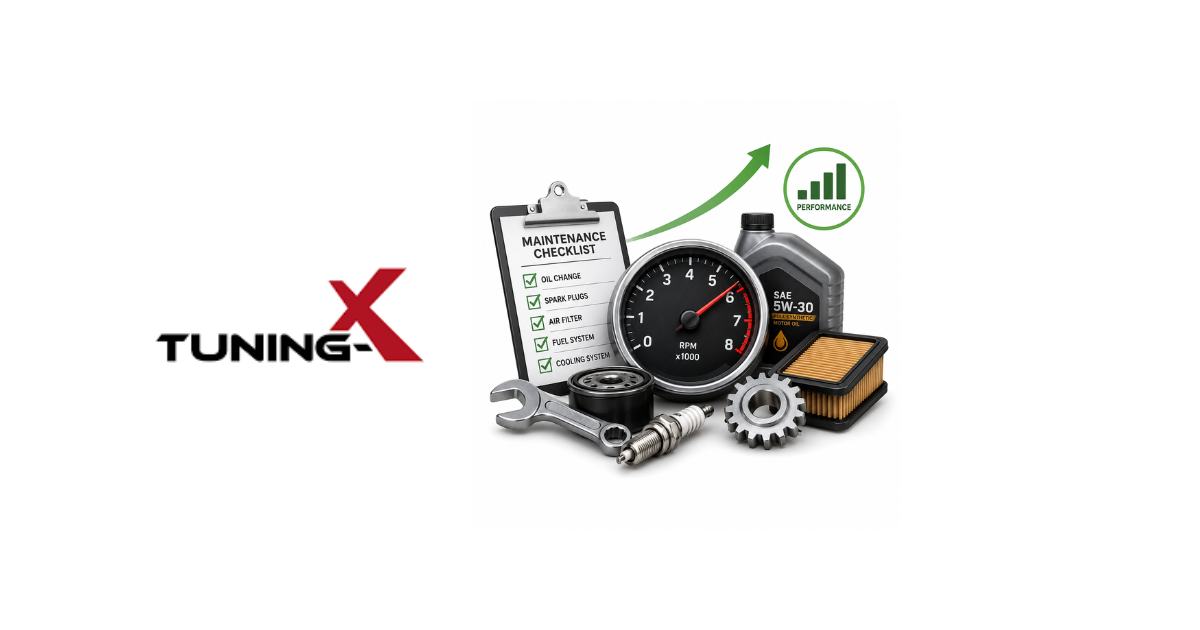

The importance of good maintenance in tuning.
Every car owner and most of the tuners are cooperating to unlock all the performance their vehicle can achieve. Whether it’s a Stage 1 ECU remap, a bigger turbo, upgraded injectors, or a full track-ready build, tuning is all about making the car faster, more responsive, and way more enjoyable to drive.
But here’s the truth that all experienced professional tuners know all too well: the best performance upgrade you can make isn’t a bigger turbo or a louder exhaust; it’s proper maintenance.
No matter how much money a driver spends on aftermarket parts, a poorly maintained car will never deliver reliable performance. Worse still, adding power to a car with existing mechanical issues can quickly turn an exciting project into a very expensive repair.
Before chasing horsepower numbers, every driver must make sure their car is 100% healthy. He should think of maintenance as the foundation of his build. Without it, everything else is at risk.
More Power Means More Stress.
When an engine is tuned up, it is asked to do more than it did from the factory setup. As one can easily understand, more boost means higher cylinder pressure. More fuel and ignition timing create more heat. Higher torque places additional stress on all the engine’s moving parts, alongside the clutch, gearbox, drivetrain, cooling system, and even the tyres.
A stock engine with a worn ignition coil or a weak, malfunctioning fuel pump might drive perfectly during everyday normal driving. But once power is increased, those hidden weaknesses quickly become obvious and cause problems. Misfires, overheating, clutch slip, fuel starvation, and even engine failure are often the result of tuning an unhealthy car in bad mechanical condition, and not the tune itself.
That’s why every professional tuner who respects himself and wants to achieve the best results always recommends a full health check before making any modifications. They always start with a Full Mechanical Inspection. Before ordering performance parts or booking an ECU remap, the car must get the attention it needs.
A thorough inspection can reveal small issues before they become major problems.
Let’s check the most important areas before tuning.
Engine Health.
The engine is the heart and the priority of every tuning project. Compression and leak-down tests are excellent ways to determine whether the engine is in good condition. Healthy compression across all cylinders means the engine is in good condition and ready to handle increased performance. If compression is low or uneven, fixing the problem should always be done before adding extra power.
The importance of Fresh Fluids.
Engine oil is way more than just lubrication; it’s pure protection. Old oil that has worked more than it should loses its ability to cope with heat and high engine loads. The same applies to coolant, brake fluid, transmission oil, and differential oil. Fresh, high-quality fluids reduce wear, improve reliability, and help your modified engine perform consistently.
Never underestimate the difference a complete service can make.
Cooling system.
One thing every tuned car produces is more heat than it produced when original. That’s why its cooling system needs to be in excellent condition. One driver must always inspect the radiator, coolant hoses, thermostat, water pump, cooling fans, and expansion tank. Even a tiny coolant leak can become a serious issue and cause a tune to fail once the engine is producing more power.
A healthy cooling system protects the engine every time the gas is pressed down.
Ignition System.
Spark plugs and ignition coils are often overlooked during performance builds. Under increased boost and cylinder pressure, worn plugs can cause misfires, while weak ignition coils, most of the time, struggle to provide a strong spark. Replacing ageing components before tuning helps ensure smooth performance and reduces the risk of engine knock.
Fuel Delivery.
It is common sense that more horsepower requires more fuel. A worn fuel pump that does not function properly or a partially blocked fuel filter may not show any symptoms during normal driving, but at full throttle, fuel delivery becomes critical, and even the slightest problem can show up. An engine that is running lean under load is one of the quickest ways to get damaged.
For every owner who is planning a significant power upgrade, he needs to make sure their car fuel system is working without any problems.
Safety Before Extra Horsepower.
Every owner enjoys talking about absolute power numbers, dyno charts, and quarter-mile times and lap times on truck days. But for every driver there’s something far more important than horsepower. It is called Safety. There’s no point in building a 400+ horsepower car if it can’t stop safely or handle confidently through corners. The smartest builders who know all the tuning secrets don’t start by gaining extra power. They start with improving control.
Brakes.
Every cars Most Important Performance Upgrade. The faster a tuned car accelerates, the better it needs to stop. Before increasing engine output, every driver needs to inspect the entire braking system. He needs to check the brake pads, discs, brake fluid, flexible hoses, and calipers for wear or any sign of a leak. Performance brake pads and fresh high-temperature brake fluid can dramatically improve braking feel during spirited driving. Every driver must remember that every fast car eventually has to slow down.
Suspension and Steering system.
Power is only useful if the car can put it onto the road safely and under control. Worn suspension components reduce grip, affect braking performance, and make the car unpredictable when cornering. Every driver should inspect shock absorbers, springs, suspension bushes, ball joints, anti-roll bar links, and steering components. Even a simple wheel alignment can transform how your car feels after tuning.
A well-balanced car is always more enjoyable and safe to drive than one that’s fast only in a straight line.
Tyres must never be forgotten.
Every driver must always keep in mind that tyres are the only connection between the car and the road. No ECU remap can compensate for worn, low-quality, or wrong-type tyres. Good tyres improve acceleration, braking, cornering, wet-weather performance, and overall driver feeling and confidence. Many experienced drivers and tuners will tell you that investing in quality, premium tyres often delivers a bigger real-world improvement than adding another 20 horsepower to a vehicle’s engine.
Properly tuning the built plan.
One of the biggest mistakes most of the new drivers make is buying parts without a plan. Instead of building their project step by step. A more sensible approach that is calculated and has good chances to succeed looks like this:
* Service the car completely.
* Repair any existing faults.
* Check engine health.
* Upgrade the braking system if necessary.
* Refresh suspension and steering components.
* Install supporting modifications.
* Finish with professional ECU tuning.
Every driver who follows this order not only protects his car, but also produces a car that offers a way better driving experience. Also, reliability is the Ultimate Performance Upgrade an owner needs. A reliable tuned car is far more enjoyable than one that’s constantly in the garage. Regular maintenance doesn’t stop once the modifications are installed. In fact, servicing becomes even more important. Oils must be changed more frequently, and spark plugs must also be inspected regularly. All coolant temperatures must be monitored, and potential tyre wear must be noted. Finally, any unusual noises or warning lights must be checked immediately.
There is a motto that says every driver that is looking after his car means it will continue looking after him.
Final Thoughts.
Tuning is about much more than chasing improved horsepower numbers. It’s about creating a car that’s exciting to drive, dependable on the road, and capable of performing safely whenever a driver asks more from it.
Every successful build must start with good, solid maintenance. Before fitting bigger turbos, performance intercoolers, sports exhausts, or booking that ECU remap, every car must be mechanically in perfect condition. Power is exciting, but reliability keeps the car running. And above all else, safety should always come before horsepower. A well-maintained car with balanced performance, strong brakes, quality tires, and a healthy engine will always outperform a neglected car with bigger numbers on a dyno sheet.
Build smart, maintain regularly, and enjoy the performance that can be offered by professional and experienced tuners. That’s what real tuning is all about.