
 Login
Login 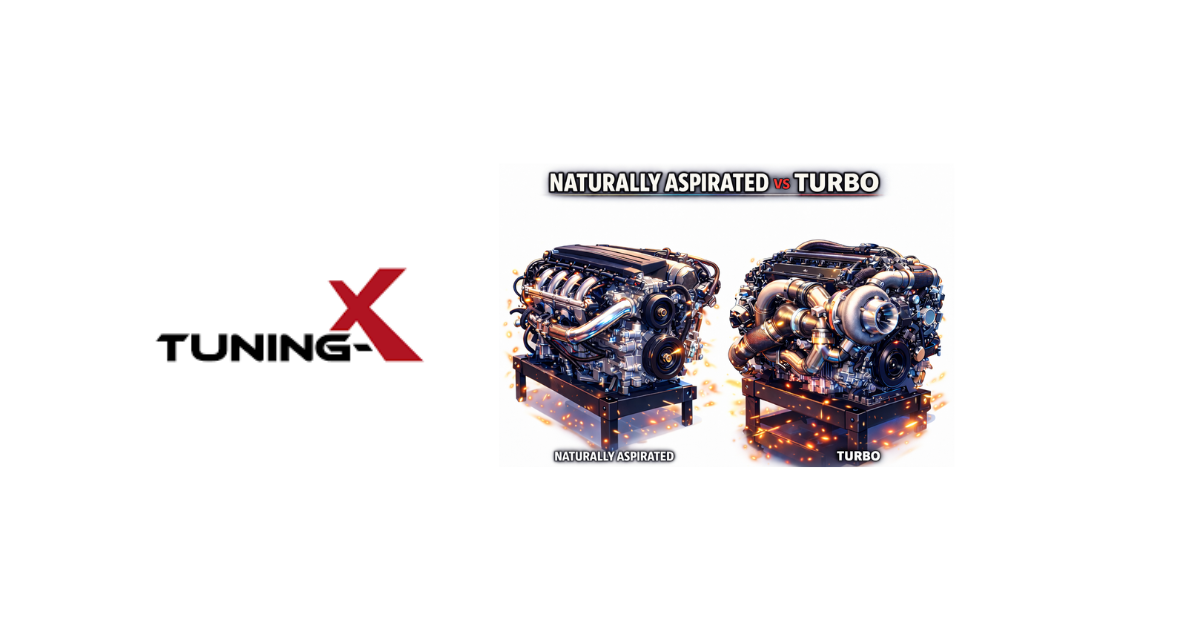

Naturally Aspirated Engine vs Turbo.
Which One Is the Best Choice?
When a potential buyer starts looking for a car, the one thing that becomes clear very quickly is that the majority of modern engines are turbocharged. Manufacturers following the spirit of the era are downsizing engines and adding turbochargers to extract way more power and meet emissions standards compared to a naturally aspirated engine. At the same time, naturally aspirated engines, even though they are way simpler in design and operation and are an older-school option that was used for many decades, are becoming less common but still have a loyal following.
So the question that comes into many drivers’ minds is the simplest one: Should they go for a turbo engine or stick with a naturally aspirated one?
The answer isn’t as straightforward as it seems; this question cannot be answered with a yes or a no. It depends on how the car will be used, what kind of driving experience is preferred, and how much importance is placed on reliability and maintenance.
In this article we will try to help any owner understand their differences, benefits, and drawbacks so to make it easier to choose the one that better fits his needs.
What Is a Naturally Aspirated Engine?
A naturally aspirated (NA) engine is the oldest, simplest, and most straightforward type of internal combustion engine. This type of engine doesn’t use any form of forced air induction. Instead, it relies purely on atmospheric pressure to draw all the air it needs into the engine.
In simple terms, the engine “breathes” on its own without having any additional system to help with this procedure.
Because of this simplicity, naturally aspirated engines have fewer components. There’s no turbocharger, no intercooler, and no boost control system. This makes the design more robust and easier to maintain over time, and cheaper as a construction in general.
From a driving perspective, NA engines are known for their instant power delivery. When the driver presses the accelerator, the engine responds almost immediately and predictably. There’s no delay, no sudden power burst, and it can be said that smooth and consistent acceleration can be felt.
This is why many drivers describe NA engines as direct. The car reacts exactly as expected, which can make it feel more immediate, especially during fast driving or track days.
What Is a Turbocharged Engine?
A turbocharged engine follows a completely different approach from naturally aspirated engines. Instead of relying only on atmospheric pressure for the air intake, it uses a turbocharger to force more air into the engine.
The turbo uses the exhaust gases to power itself. As exhaust flows out of the engine, it spins a turbine, which in turn compresses incoming air in the air intake. More air means more fuel can be burned, and that results in more power from a smaller engine.
This is why modern cars often have small engines, like 1.0L or 1.4L, that produce power levels once associated with way larger engines.
On the road, turbo engines behave differently. They tend to produce strong torque at low RPM, which makes them feel powerful even without revving high. Many drivers notice a push, like a kick, when the turbo builds boost.
Modern turbo systems have reduced turbo lag, the state that an engine-like stall occurs until gases spin the turbine enough to produce pressure, significantly, but there’s still a different character compared to naturally aspirated engines.
Performance Comparison.
Naturally aspirated and turbo engines, when they are compared in performance, the differences are easily noticeable. Let’s analyze it in detail.
Power and Torque.
When it comes to power and torque output, turbo engines clearly have the advantage, especially at low RPM. This makes them feel quicker in everyday driving, particularly when accelerating from low speeds or overtaking, even though in most cases they are small cubic engines.
Naturally aspirated engines, on the other hand, are building power gradually. This is why they are required to operate at higher RPMs in order to deliver their full power output, which can make them feel less powerful at low speeds but more rewarding when pushed to their limits.
Throttle Response.
This is where NA engines win easily, without a doubt. Because there’s no turbo involved, without the lag that follows all turbo engines, the response to throttle input is instant and effortless.
Turbo engines, even the new-era ones that are greatly improved in this area, can have a slight delay, also known as turbo lag. And even though modern systems have minimized it. Still, the response cannot be as immediate as a naturally aspirated engine.
Driving Experience.
NA engines, since there is no turbo lag, are most of the time described as more predictable and engaging. The driver feels more in control, especially in fast driving or truck days. They deliver their power almost instantly.
Turbo engines, on the other hand, deliver performance more effortlessly. They require less effort to achieve higher speeds, which can be more comfortable. But they have the known lag, which is almost not present in the late models.
Fuel Economy.
On paper, turbocharged engines often offer better fuel efficiency. This is because they are smaller and designed to operate efficiently under light loads. That is more on paper, though. However, real-world fuel consumption under everyday driving is a completely different story.
When driven gently and not at really high revs, turbo engines can indeed be efficient. But under heavy acceleration, in the rev range where the turbo is actively producing boost, the fuel consumption is increased significantly.
On the other hand, the most predictable naturally aspirated engines tend to have more consistent fuel consumption. They may not match the best-case efficiency of a turbo engine when the turbo engine is not pressed, but they also don’t spike as much under load. They tend to have a more balanced and predictable fuel consumption.
In the end, fuel economy depends more on how the car is driven than on the engine type itself. It is not possible to have fuel efficiency from a turbo engine when it is pushed at its limits.
Reliability and Maintenance.
For many drivers, especially those who invest a great amount of money, this is one of the most important factors that affects their final decision. Naturally aspirated engines are, by design, way simpler. They have fewer components; this means fewer things can go wrong. They are generally more tolerant of neglect and less sensitive to oil quality and maintenance intervals. Also, by design, they work in less boost pressure.
The powerful turbo engines, on the other hand, are way more complex. They include additional components such as
- The turbocharger itself
- Intercoolers
- Boost control systems
These parts operate under high temperature and pressure, which increases wear over time. Turbo engines also rely heavily on proper, if not earlier than scheduled, maintenance. Poor oil quality or, far worse, a missed service can lead to premature turbo failure and extreme wear and tear.
The bottom line is that NA engines are usually way cheaper, easier to maintain long-term, and can forgive an owner that does not maintain them right on time. Turbo engines are more expensive; they require more care and can be more expensive to repair in case of a failure.
Tuning Potential.
When it comes to tuning, there cannot be a comparison; it is known that turbo engines have a clear advantage. A simple software upgrade (often called Stage 1 tuning) can significantly increase power in a turbocharged engine. Gains of 20–30% are the most typical and easiest to reach. Naturally aspirated engines are much harder to tune. Increasing power typically requires mechanical changes with aftermarket parts, such as:
- Upgraded camshafts
- Performance exhaust systems
- Intake modifications
These upgrades can be expensive and often deliver way smaller gains compared to a simple stage 1 turbo engine tuning. For anyone interested in performance upgrades, turbo engines are the easier and more cost-effective choice.
Daily Driving vs. Performance Use.
Daily Driving.
Since most of the cars are bought for everyday use, turbo engines are often more convenient and make driving effortless. Since turbo engines have strong low-end torque, city driving is way easier. They tend to require less gear shifting and effort, and keep the fuel consumption low. On the other hand, the classic naturally aspirated engines are not that bad. NA engines perform well in daily driving. They offer smooth and predictable behavior. However, since they produce less torque and power in general, they may feel less responsive at low RPM compared to turbo engines and often require more gear changes.
Sport Driving.
For sport and, in general, fast driving, naturally aspirated engines offer a more engaging experience. The more direct power delivery and immediate response make them feel more controlled in their reactions and more predictable. Turbo engines are way more powerful and provide faster acceleration, but the power delivery can feel less predictable, especially when, on some setups, boost comes in suddenly like a kick. This makes them more difficult to drive.
Harsh Conditions and Cost Considerations.
When performing in environments with dust, heat, or heavy-duty use, such as agricultural trucks or off-road applications, naturally aspirated engines tend to be more durable and long-lasting. Their simplicity makes them less sensitive to extreme conditions compared to turbocharged engines, and for many applications, they are used almost completely. In the last few years, though, modern turbo engines are gaining ground and becoming more and more popular even in these areas of use.
Cost is another important factor when choosing an engine type. Turbocharged engines often come with higher buying prices and repair costs due to their complexity. Components like turbochargers and intercoolers can be expensive to replace. And turbocharged engines need better quality oils and filters. Naturally aspirated engines are generally cheaper both to buy and to maintain. With fewer parts and less stress on the system, long-term ownership costs are often lower. Consumables (oils and filters) that are used are cheaper in general.
Which one is the Best Choice?
There’s no universal answer; this question cannot be answered with one or the other. It depends on what the driver values most and the budget that he is willing to pay.
A naturally aspirated engine is a better choice for the drivers who want:
- Long-term reliability
- Simplicity
- Lower maintenance costs
- A more connected driving experience
A turbocharged engine is ideal for those who want:
- More power from a smaller engine
- Strong low-end torque
- Better tuning potential
- A modern driving feel
Ultimately, it comes down to priorities. Some drivers prefer the simplicity and durability of a naturally aspirated engine, while others enjoy the performance and efficiency of a turbocharged setup.
Conclusion.
Both naturally aspirated and turbocharged engines have their strengths, and neither can win the crown of being the better engine in every situation. Modern trends clearly favor turbocharging, mainly due to efficiency and emissions requirements and, of course, their power gains from way smaller engines. That said, though, the naturally aspirated engines continue to be produced and used. Since they offer a level of simplicity and reliability that many drivers still appreciate, they are a choice for many even today. In the end, the right choice is not something that can be decided from numbers. It all depends on how the car will be used, how it will be maintained, and what kind of driving experience is expected. The choice between the two isn’t about following trends or calculating numbers; it’s about selecting the engine that fits every driver’s needs.