
 Login
Login 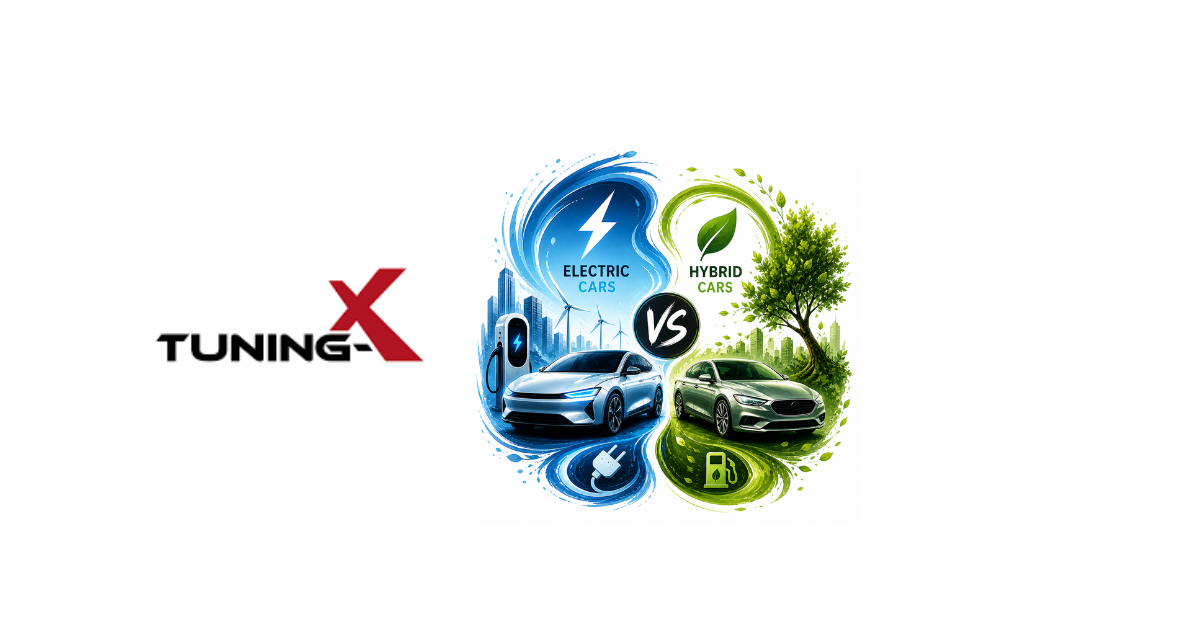

Electric vs. Hybrid Cars.
Which Should You Choose?
The car industry in the last few years is undergoing one of the biggest transformations in its history. With rising fuel prices, stricter emissions regulations, and growing environmental awareness, more drivers are looking beyond traditional petrol and diesel vehicles. The two most popular alternatives are electric and hybrid cars. They often come up in the same conversation, but they are far from identical, and even though many people consider them the same, many are different from the same.
For many buyers, the choice between the two isn’t straightforward. Each offers distinct advantages and disadvantages, and the “better” option depends largely on how and where the car will be used.
Understanding Electric Cars operation.
Electric vehicles (EVs) run entirely on electricity. Instead of a traditional internal combustion engine, they are equipped with a battery pack and one or more electric motors. Popular models like the Tesla Model 3 and Nissan Leaf have brought EVs into the mainstream. They have made clear that electric mobility can be both practical and enjoyable, and it can be the future solution in the automotive industry in the upcoming decades.
One of the biggest appeals of electric cars is their simplicity. With far fewer moving parts than internal combustion engines, they require way less maintenance and, in really long-time distances. There are no oil changes, fewer fluids to manage, and less mechanical wear overall. On the road, they deliver instant torque, resulting in smooth and often surprisingly quick acceleration.
Running costs are another strong advantage. Charging an EV is typically cheaper than filling up with fuel, especially for those who can charge at home or owners that have solar panels. For city drivers, this can translate into significant savings over time.
Although they have a lot of benefits, electric cars are not without drawbacks and disadvantages. Most important is their range limitations; although less of an issue with newer models equipped with more sophisticated batteries and modern electric motors, it still concerns a lot of potential buyers. Charging infrastructure continues to improve and grow, but it varies widely depending on location. Long-distance travel may require careful planning, particularly in areas where charging stations are sparse.
Understanding Hybrid Cars operation.
Unlike electric vehicles, hybrid ones are following a completely different approach. Instead of relying completely on electric power in the form of batteries, they combine a traditional petrol internal combustion engine with an electric motor. This combination gives the car the ability to be able to use power sources or even use both at the same time, depending on driving conditions and needs.
There have been several forms or types of hybrid vehicles on the market in the last few years. The most popular are the mild hybrids; these provide small efficiency gains but cannot run on electric power completely—they need their petrol engine all the time. Full hybrids, on the other hand, are able to drive short distances using only electric power, in-town driving, and especially at low speeds most of the time. Finally, plug-in hybrids (PHEVs) are equipped with a larger battery that can be charged externally, making an all-electric trip a reality.
The main advantage of hybrids is the flexibility they offer. They do not depend on charging infrastructure in the same way EVs do, making them a practical option for drivers who frequently travel long distances or in areas where charging infrastructure is not present in sufficient quantities. Fuel efficiency is also improved compared to conventional cars, particularly in stop-and-go city traffic, since the electric motor greatly helps in this area.
On the downside, hybrids still rely on fossil fuels. It is true that they produce fewer emissions than the vehicles that are equipped with a traditional internal combustion engine; they do not eliminate them entirely, though. Additionally, the combination of two power systems, electric and petrol, makes them mechanically way more complex. This can affect long-term maintenance costs and buying price, especially compared to traditional vehicles with internal combustion engines.
Key Differences That Matter the most.
Even though the distinction between electric and hybrid cars is obvious and really easy to figure out, the real differences have to do with how they fit into everyday life and what needs they can satisfy.
Electric cars operate entirely on battery, electric power. This leads to zero emissions and a quiet and smooth driving experience in general; this also poses a reliance on the rare charging infrastructure. Hybrids, on the other hand, offer a balance between electric assistance and internal combustion engines, removing the need to worry about running out of electric energy.
When it comes to running costs, electric vehicles generally come out ahead and win easily. Electricity is way cheaper than petrol in most regions, and maintenance requirements are lower. Hybrids still offer savings compared to conventional cars, but they do not match the efficiency of a fully electric system.
Range is another critical factor, and to be honest, one of the most important. While modern EVs have made significant progress, hybrids still provide the convenience and safety of long-distance travel without interruptions for charging or, worse, the fear of not being able to charge at all. For drivers who frequently cover large distances, this can be a decisive advantage and the most important.
Environmental impact finally can be a key consideration. Electric vehicles produce no emissions while driving, making them the cleaner option, especially when charged using renewable energy. Hybrids pollute less than conventional internal combustion engines, but even they pollute, positioning them as a step toward a full electric solution.
Cost Considerations.
In today’s stressed economy, a vehicle’s price plays a major role for any potential buyer. Electric cars typically have a higher buying price when compared to a conventional vehicle. This happens largely due to the price of battery packs. However, this gap has been narrowing in recent years, and government incentives in many regions help offset the initial buying expense.
Hybrids tend to have a more affordable buying price. This makes them a very attractive option for potential buyers who want to combine electric power but at the same time have the flexibility that is offered by a conventional internal combustion engine.
In the big picture and in the long run, especially in heavy use, the overall buy and use cost balance can change drastically. Lower fuel and maintenance expenses often make EVs cheaper to own in the long run and after many kilometers. Still, factors such as battery lifespan, resale value, and local energy prices should be taken into great consideration for any potential buyer.
A sight in the future.
The future of the automotive industry seems to be moving toward using completely electrical vehicles. The modern advances in battery technology, expanding charging networks, and stricter environmental policies are accelerating the shift toward fully electric cars.
Hybrids are a good choice today, and they are a transitional technology. They offer a bridge between traditional engines and fully electric systems, helping drivers adapt and take the best of both worlds. Where it will lead and what kind of power future vehicles will use will be yet to be discovered.
Final Thoughts.
All lead to the final question: what is the best choice? There is no universal answer to whether an electric or hybrid car is the best choice. Each type supports a different purpose and fits better a different type of driver and driving situation.
Electric vehicles are known for their efficiency, low running costs compared to internal combustion engines, and environmental benefits. Hybrid setups provide flexibility and ease of use, particularly for the potential owners that are not ready to rely entirely on charging infrastructure in the area they are driving their vehicles.
In the end, the right choice has to do with the personal needs of each driver. His personal driving habits, his access to charging, and his budget. By understanding these factors, any potential buyer can make a decision that not only fits his needs today but also prepares him for the future.