
 Login
Login 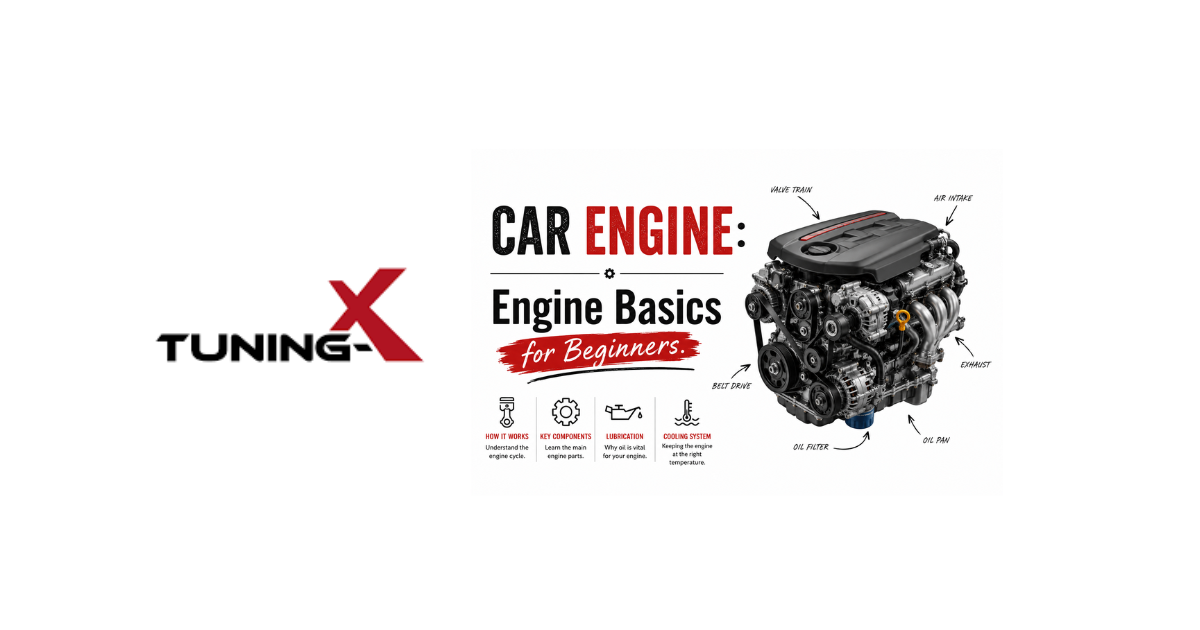

CAR ENGINE: Engine Basics for Beginners.
A car engine, in most cases, is called the heart of a vehicle, and for a very good reason. Without it, a car simply cannot move, and it is practically useless. While engines may seem too complicated at first, understanding the basics is easier than many beginners think. Learning how an engine works can help drivers maintain their vehicles properly, recognize early warning signs of problems, and make them able to communicate more easily with mechanics.
Modern car engines are highly advanced and rely heavily on electronic systems. That said, they still operate using the same basic principles as when they first appeared. From fuel combustion to moving pistons and rotating crankshafts, every engine follows a process designed to convert fuel into motion.
In this article, we will try to explain the basics of car engines. How they are designed to work, their major components, and common engine types. We will also see some simple maintenance tips that are really useful to every driver.
What Is a Car Engine?
A car engine is a mechanical assembly designed and manufactured more than 150 years ago that converts fuel into mechanical power. This power is then used to move the vehicle’s wheels and drive the car. The majority of vehicles today use an internal combustion engine. Burning fuel, it creates power through precise explosions inside the engine cylinders. To make it more understandable, fuel mixes with air inside the engine, ignites either by spark or by pressure, and creates energy that pushes engine components into motion.
Internal combustion engines are separated into two main types of car engines:
- Gasoline engines
- Diesel engines
Both types operate with the same philosophy in general terms. They differ in how fuel ignition occurs. Gasoline engines use spark plugs to ignite the fuel-air mixture, while in diesel engines, high compression and heat are responsible for the ignition.
In the last few decades, electric vehicles have become more common and popular and are gaining in market share. Internal combustion engines still power millions of cars worldwide, though, and it seems that they will do it for a lot of decades to come.
How Does a Car Engine Work?
Most of the internal combustion engines use the four-stroke combustion cycle in order to operate. This cycle has four stages: the intake, the compression, the power, and finally the exhaust. The four stages are the following:
The Intake Stage. During the intake stage, a mixture of air and fuel enters the cylinder. For this to happen, the intake valve opens as the piston moves downward, creating the space needed and allowing the mixture to enter.
The Compression Stage.
During the compression stage, the piston moves upward and compresses the air-fuel mixture inside the cylinder.
The Power Stage.
During the power stage, is where energy is created. In gasoline engines, the spark plug ignites the compressed mixture, causing an explosion. This explosion pushes the piston downward with.
Exhaust Stage.
After combustion, the gases that were created remain inside the cylinder. The need to exit the cylinder in order for the circle to close: during the exhaust stroke, the exhaust valve opens and the piston pushes the gases out of the engine.
These are the 4 stages of a four-stroke combustion cycle. This cycle is repeated many times per second while the engine is running.
Main Parts of a Car Engine.
As it is easily understood, an engine has many components that work together in order to produce power and movement. That said, some major parts are essential to the engine’s operation, and those are the ones that play the crucial role. Let’s see them.
Engine Block.
The engine block forms the main structure of the engine. This is where cylinders are located, passages for coolant fluid and oil, and supports many other engine parts.
It is typically made from aluminum or cast iron for strength and durability, according to the manufacturer’s specifications.
Pistons.
Pistons are the moving parts that travel up and down inside the cylinders during the combustion process.
Their movement is generating the mechanical force needed to rotate the engine.
Crankshaft.
The crankshaft converts the pistons’ up-and-down motion into rotational movement. This rotating force is eventually transferred to the wheels through the transmission.
Without the crankshaft, it wouldn’t be possible to create rotational movement and move the vehicle.
Camshaft.
The camshaft is the mechanical part that controls the opening and closing of engine valves.
Proper valve timing is extremely important because the engine must precisely manage and fine-tune airflow and exhaust gases during combustion.
Valves.
Engines contain intake and exhaust valves; they have the same name but opposite functions in an engine, and their function is extremely important.
- Intake valves allow air and fuel into the cylinder
- Exhaust valves release burned gases
These valves open and close continuously and in perfect coordination while the engine runs.
Spark Plugs.
Spark plugs are used in gasoline engines to ignite the compressed air-fuel mixture.
If they are not in perfect condition or are not the correct type, they can cause poor performance, rough idling, or engine misfires.
Fuel Injectors.
As everyone knows, in order to produce power, an engine needs fuel. Fuel injectors spray this fuel into the combustion chamber in controlled amounts and precise timing.
Modern fuel injection systems improve fuel efficiency, emissions, and engine performance.
Timing Belt or Timing Chain
For an engine to work, the crankshaft and camshaft must be perfectly synchronized. The timing belt or timing chain is responsible for this synchronization.
If engine timing is not correct for any reason, then severe damage can happen to the majority of engines.
Cooling System.
When an engine is operating, it produces a tremendous amount of heat, and if that is not dealt with, it can completely damage an engine. The cooling system helps prevent overheating by circulating coolant through the engine and radiator, keeping the coolant fluid at a controlled temperature. A failed cooling system can quickly break down an engine.
Oil System.
All metal engine moving parts are producing friction when the engine is running. Engine oil lubricates them and reduces friction. Without proper lubrication, engine components would wear out fast.
Common Types of Car Engines.
Although car engines operate using the same basic principles, they come in several designs and configurations according to the manufacturer.
Inline Engines.
Inline engines arrange cylinders in a straight line. This is the most common engine layout because it is compact, efficient, stable when working, and the simplest to manufacture among the engine types.
V Engines.
V engines position cylinders in two angled rows, forming a “V”-shaped corner that is distinguished. These engines are commonly found in larger vehicles and performance cars because they can produce more power than an inline one.
Boxer Engines.
Boxer engines use horizontally opposed cylinders that move side to side. They imitate two boxers sparring. This design lowers the vehicle’s center of gravity and improves balance; its sound is also unique. Some manufacturers, such as Subaru and Porsche, are known for using boxer engines.
Gasoline vs Diesel Engines.
Depending on the fuel and engine uses, they are divided into two major categories. The gasoline and the diesels. Gasoline engines are generally smoother and quieter, while diesel engines often provide better fuel economy and stronger low-end torque.
Diesel engines are commonly used in trucks and heavy-duty vehicles, although in recent decades, some passenger cars have used diesel engines more and more.
Turbocharged Engines.
Turbocharged engines, used only in racing applications for the last few decades, have become way more popular and are found in the majority of cars. They use exhaust gases to spin a turbine that forces more air into the engine. This setup allows smaller engines to produce more power while maintaining good fuel efficiency.
Turbochargers are increasingly common in modern vehicles because they help manufacturers improve both performance and emissions.
What Do Engine Sizes Mean?
All car engines are labeled with numbers such as 1.5L, 2.0L, or 3.5L.
These numbers refer to engine displacement, which is the total volume of all the engine’s cylinders combined. This number is the one that indicates the engine’s combustion chamber’s actual size. There is a general rule that smaller engines usually provide better fuel economy and larger engines often produce more power and torque.
That said, modern technology has changed this significantly. Many small turbocharged engines under modern electronics now produce power levels that were once only possible with much larger engines. Engine size alone does not determine overall vehicle performance.
Common Engine Problems Beginners Should Know.
Modern engines are really well manufactured and are extremely reliable. Although they face mechanical problems. Understanding these common engine problems can help drivers identify issues early before they become a big problem or cause expensive damage. Let’s see some of the most common engine problems.
Overheating.
An overheating engine can result from:
- Low coolant fluid levels
- Coolant fluid leaks
- A failing radiator
- A broken thermostat
Overheating should never be ignored, since the engine produces excessive heat when running; ignoring overheating can cause severe engine damage.
Oil Leaks.
Oil leaks are one of the most common engine problems. With time, all engines tend to face oil leaks. If these leaks are not addressed or are severe, they can reduce lubrication and increase engine wear. Drivers should regularly check for oil spots under the vehicle, monitor oil levels, and fix any oil leaks they discover.
Engine Misfires.
Misfires occur when combustion inside one or more cylinders fails properly. This led to a distinguished sound and abnormal engine running.
Possible causes include:
- Worn spark plugs
- Ignition problems
- Fuel delivery issues
Misfires can cause rough running and reduced performance. If they are not addressed, they can harm the engine badly.
Check Engine Light.
All modern engines rely heavily on electronics; they have onboard computers that fine-tune and monitor every function of an engine. If something is wrong, a check light indicator informs the driver. The check engine light warns drivers about potential engine or emissions problems even at their beginning.
While some issues may be minor and completely harmless, others can be serious. Diagnostic scanning is usually necessary to identify the exact problem and proceed to fix it.
Strange Noises.
Unusual sounds such as knocking, ticking, or grinding may indicate internal engine problems. Any persistent engine noise should be inspected promptly.
Basic Engine Maintenance Tips.
Proper maintenance is the best way to extend engine life, avoid expensive repairs, and keep an engine reliable for extremely long mileage. Let’s see some steps that can keep an engine in its best shape.
Change Engine Oil Regularly.
Engine oil’s role is to lubricate and cool the engine. A driver should always follow the manufacturer’s recommended oil change intervals and always use quality oil that follows the manufacturer’s specifications. This way, the engine is protected and is working without excessive wear and tear.
Check Coolant Levels.
Coolant prevents the engine from overheating. Drivers should inspect coolant levels frequently and always fix any leaks, even the minor ones.
Replace Air Filters.
Clean air filters help the engine breathe properly and maintain fuel efficiency. A dirty air filter can reduce performance, increase fuel consumption, and even lead to mechanical problems since it can cause the engine to not function properly.
A driver must always pay attention to warning lights and engine checks.
There are some signs an engine needs immediate attention, and certain symptoms should never be ignored.
Drivers should seek professional inspection immediately if they notice one of the following:
- Excessive smoke from the exhaust (regardless of the smoke color).
- Engine overheating.
- Loud knocking noises.
- Power loss
- A flashing check engine light
Driving with severe engine symptoms can certainly lead to catastrophic damage.
Conclusion.
To the majority of beginners, a car’s engine may appear complicated. That said, though, the engine’s basic principles are easy to understand. Every engine works by converting fuel into moving energy and powers the vehicle.
By learning the basics of engine operation, drivers can better understand how their vehicles function. They can recognize warning signs early and maintain their cars more effectively.
Even basic engine knowledge can help car owners save money. By knowing the way their engine works, they can avoid unnecessary repairs and feel more confident when driving their vehicle. For beginners, understanding the engine is an excellent first step toward becoming a smarter and more informed vehicle owner.